How Is THCA Flower Made? Sprayed or Synthetic?
The quick bite
THCA flower is grown, not manufactured. Cannabis plants make THCA in their trichomes, and growers protect it by drying and curing buds at cool temperatures.
THCA flower looks, smells and burns like any other cannabis bud, yet its lab report shows almost no THC. That mismatch leads a lot of shoppers to wonder whether the buds were treated, coated or built in a lab.
The answers sit in three places: how the plant builds THCA, what growers do after harvest to protect it, and what separates natural flower from flower that was coated afterward. This guide covers all three, then shows how to check a product yourself.
What Is THCA Flower and Where Does THCA Come From?
THCA flower is ordinary cannabis flower that contains a lot of tetrahydrocannabinolic acid (THCA), a cannabinoid the plant makes on its own. Nothing is added to create the THCA in natural flower. The plant produces it as the buds develop.
THCA is the acid form of THC. A 2016 analytical study notes that acidic cannabinoids are the predominant cannabinoids in the plant, while neutral ones such as THC do not occur in significant concentrations until the acid loses a carbon dioxide group in a reaction called decarboxylation. [1] Heat is the usual trigger, so unheated THCA stays in its acid form until the flower is smoked, vaped or cooked.
THCA flower became its own product category because of how U.S. hemp law was first written. Some sellers read the 2018 farm bill definition, which capped hemp at 0.3% delta-9 THC by dry weight, to mean that flower high in THCA but low in delta-9 THC counted as hemp. [2] That reading is ending, as the legal section below explains.
How Do Cannabis Plants Make THCA?
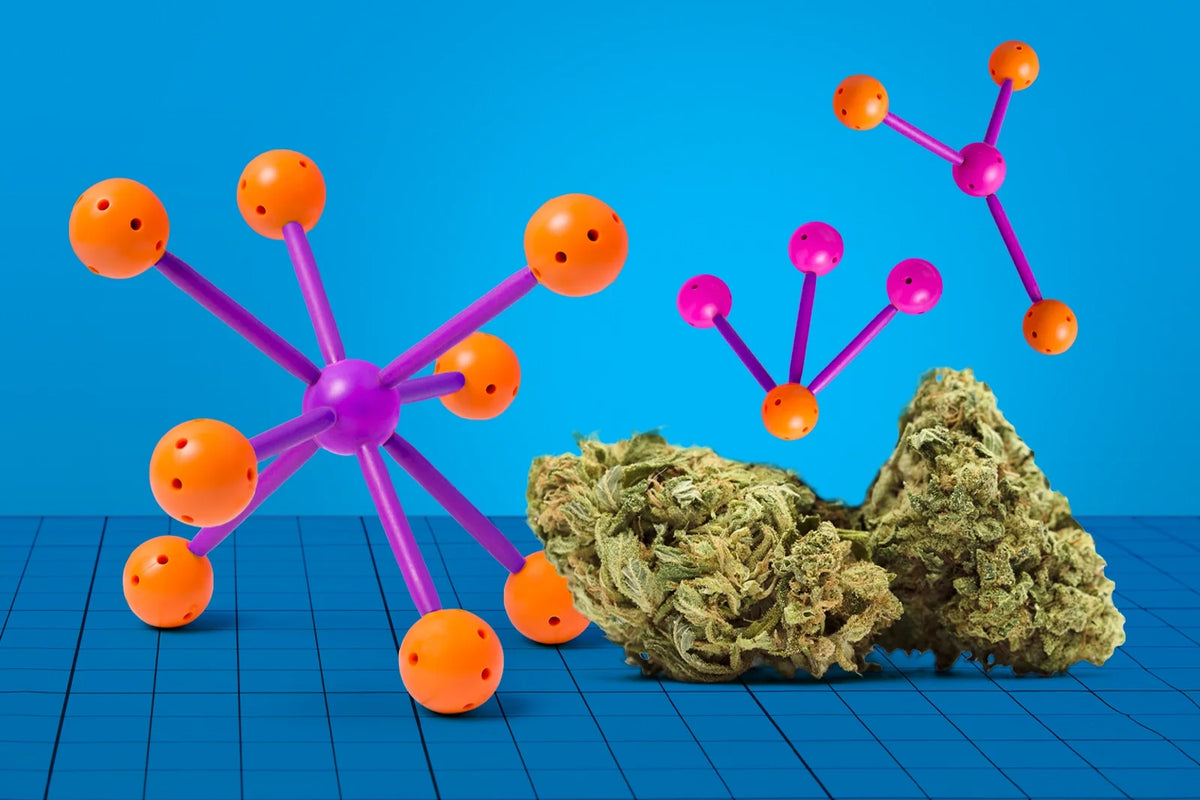
Cannabis plants make THCA in tiny resin glands called trichomes, where an enzyme named THCA synthase converts a precursor molecule, cannabigerolic acid (CBGA), into THCA.
The enzyme does the chemistry. According to the enzyme database maintained by the International Union of Biochemistry and Molecular Biology, THCA synthase reacts CBGA with oxygen to form THCA and hydrogen peroxide. [3] In a 2005 study that combined plant tissue analysis with transgenic tobacco, researchers found the enzyme in the secretory cells of glandular trichomes and in the contents of the gland's storage cavity, and concluded that THCA is built inside that cavity. [4] Those trichomes are the frosty crystals that coat a healthy bud.
Three things shape how much THCA ends up in a finished bud:
-
Genetics: Plants inherit how much THCA they can make, which is why growers pick cultivars bred for it. Cultivars grown for fiber or seed usually make much less.
-
Growing Conditions: Light, temperature, nutrition and plant health all affect how well buds develop and how much resin they carry.
-
Harvest Timing: Growers judge ripeness by examining trichomes under magnification, because cutting too early or too late changes the cannabinoid mix.

How Is THCA Flower Grown, Dried and Cured?
THCA flower is grown from high-THCA cultivars, harvested when the trichomes are ripe, then dried and cured at cool temperatures so the THCA stays intact.
Cool matters because heat is what turns THCA into THC. In a one-year storage study of cannabis flower and extracts, a storage temperature of 25°C caused the largest changes in cannabinoid concentrations compared with the other conditions tested. [5] The usual process runs in five stages:
-
Growing: Producers raise a THCA-rich cultivar indoors, in a greenhouse or outdoors, and harvest once the trichomes look ripe.
-
Drying: Branches or trimmed buds hang in cool, dark, humidity-controlled rooms, which lets moisture leave slowly while keeping heat low.
-
Curing: Dried buds rest in sealed containers that are opened regularly, so remaining moisture evens out and flavor develops.
-
Storage: Finished flower is kept cool, dark and airtight to slow the changes that heat, light and oxygen cause.
-
Testing: A lab measures cannabinoids and checks for contaminants, and the results go on a certificate of analysis (COA).
Time changes the numbers too. In a four-year study of six high-potency cannabis samples stored at room temperature, almost all of the THC had degraded by the end, with cannabinol (CBN) forming in its place. [6] Flower tested months ago can read differently today, which is why the test date on a COA matters.
Why Does THCA Flower Test Low in THC?
THCA flower tests low in delta-9 THC because THCA only turns into THC when heated, so a lab report lists the acid form and very little THC.
Labs usually report THCA and delta-9 THC on separate lines, then add a total THC figure. USDA's hemp rules calculate the decarboxylated value as delta-9 THC plus 0.877 times the THCA value, a molecular mass conversion that reflects the weight lost when THCA becomes THC. [7]
A flower with 25% THCA and 0.2% delta-9 THC works out to about 22.1% total THC (0.2 + 0.877 × 25). The delta-9 line shows what is already in the bud, while total THC approximates what the flower can deliver once it is heated.
This math is not new at the farm level. USDA's rule for hemp growers requires test results that report total available THC from the sum of THC and THCA. [8] Retail products were still defined by delta-9 THC alone until the 2025 law covered in the final section of this guide.
Is THCA Flower Synthetic?
THCA flower is not synthetic, because cannabis plants build THCA themselves and no laboratory reaction is needed to make it in natural flower.
The confusion comes from the word itself. The National Institute on Drug Abuse describes synthetic cannabinoids such as K2 and Spice as lab-made substances that are chemically similar to chemicals found in the cannabis plant but often produce very different effects. [9] That is a different class of compound from THCA, which is the molecule the plant produces with the enzyme described above.
Federal law now draws a similar line. The 2025 hemp law excludes products containing cannabinoids that a cannabis plant cannot naturally produce, and also products containing cannabinoids the plant can produce but that were synthesized or manufactured outside it. Because the plant makes THCA, natural THCA flower does not fall into the first group. The more useful question is whether the THCA in a bud grew there or was added afterward, which leads to sprayed flower.

🌲 Lush flavor, deep melt. Berry Larry OG Jelly Holes THCP. 2g prerolls, juicy berry with a splash of pine.
Sprayed THCA Flower: Buy or Pass?
Sprayed THCA flower is hemp flower coated with THCA isolate, distillate or diamonds after harvest, and whether it is worth buying depends on disclosure and lab results.
It starts with ordinary hemp buds, often from a low-cannabinoid cultivar. A producer then coats them with a THCA concentrate, so the lab report shows a high THCA number that the buds never produced. This is the same post-harvest approach used for other cannabinoid flower, such as delta-8 flower. The table shows how it compares with the other THCA flower you may see.
|
Type |
How it is made |
Source of the THCA |
|
Natural THCA flower |
Grown from a high-THCA cultivar, then dried and cured |
The plant itself |
|
Kief-coated or rosin-filled flower |
Natural flower rolled in or filled with resin collected from cannabis |
Plant resin added to the bud |
|
Diamond-infused flower |
Flower coated or filled with THCA crystals |
Crystals purified from plant extract |
|
Sprayed flower |
Low-cannabinoid hemp flower coated with THCA isolate or distillate |
Added concentrate, not the buds |
Not every coated product hides it. Infused pre-rolls are sold as infused, with the diamonds or kief named on the label. The line that matters is disclosure and paperwork:
-
Buy When: The label says what was added, the COA covers the finished batch, and the report includes terpenes and contaminant tests.
-
Pass When: The listing is vague about how the flower is made, the COA is missing or belongs to a different batch, or the potency looks too good for the price.
Is Sprayed THCA Flower Safe to Smoke?
Sprayed THCA flower is not automatically unsafe, but nobody can promise it is clean without a lab report for the finished batch.
There is little published research on sprayed THCA flower itself. Research on other residues does show that they can reach the lungs: in a 2013 lab study that contaminated flower with several pesticides and a plant growth regulator, up to 69.5% of the residues reached mainstream smoke, depending on the device and the compound. [10] The study tested pesticides rather than THCA concentrates, but it shows why anything added to flower, including leftover solvent from making a concentrate, belongs on a lab report.
How to Tell If THCA Flower Is Sprayed
The best way to tell if THCA flower is sprayed is the certificate of analysis (COA), the lab report for the exact batch, because looks and smell can mislead. Check these five items before you buy:
-
Batch Match: The batch number on the report matches the package, and the report covers the finished flower rather than the raw material.
-
Terpene Panel: Natural flower usually shows several terpenes in varying amounts, so a missing panel, or one compound that dominates, deserves a question.
-
Contaminant Tests: Look for residual solvents alongside pesticides, heavy metals and microbials, since concentrates are made with solvents.
-
Minor Cannabinoids: Natural flower usually lists others, such as CBGA, beside THCA, so a very high THCA reading with almost nothing else is worth asking about.
-
Test Date: A recent date matters because potency shifts as flower ages.
Your eyes and nose are weaker evidence. A glossy or wet-looking surface, trichomes that look flattened under a film, one loud smell that never changes, or a harsh chemical taste can hint that the flower was laced or coated with something. None of these proves anything, because poorly cured flower can look and taste off too.
Is THCA Flower Still Legal to Sell?
Under current federal law, the rule that counts THCA toward the 0.3% hemp limit takes effect December 11, 2026, and most THCA flower sits far above that limit. [2]
Congress passed Public Law 119-37 in November 2025, and its new hemp definition was first set to start on November 12, 2026. A continuing resolution passed on September 2, 2026 delayed the rest of the definition until December 11, while the exclusion for cannabinoids a cannabis plant cannot naturally produce still began on November 12. [2] The definition measures total THC, including THCA, and it excludes finished hemp-derived cannabinoid products with more than 0.4 mg of total THC and similar cannabinoids per container. [2]
The 0.877 formula shows why flower is affected: a bud with 20% THCA works out to about 17.5% total THC, far above 0.3%. [7]
The date could still move, because several bills in Congress would delay the definition again or repeal the change. [2] State rules are separate from federal rules and vary, so check your state's current law before buying.
Key takeaways
- Natural THCA flower is grown, not manufactured: cannabis plants make THCA in their trichomes using an enzyme called THCA synthase.
- THCA turns into THC when heated, so a lab report shows high THCA and low delta-9 THC, and total THC (delta-9 THC plus 0.877 times THCA) approximates the strength once the flower is smoked or vaped.
- Sprayed or infused flower starts as low-cannabinoid hemp buds coated with THCA isolate, distillate or diamonds, so the extra THCA comes from the coating and not from the plant.
- A batch-matched COA with a terpene panel and residual solvent results is the best check, because sight and smell alone cannot prove how flower was made.
- Under current federal law, THCA counts toward the 0.3% hemp limit from December 11, 2026, which puts most THCA flower outside the federal hemp definition.
The Group Chat
Find your next favorite.
Lab-tested, third-party verified and shipped to your door.
Shop THCA PRODUCTSSources
Every stat in this post is checked against these.- Wang M, et al. Decarboxylation study of acidic cannabinoids: a novel approach using ultra-high-performance supercritical fluid chromatography/photodiode array-mass spectrometry. Cannabis and Cannabinoid Research. 2016.pubmed.ncbi.nlm.nih.gov
- Congressional Research Service. Changes to the Statutory Definition of Hemp and Implications for Agricultural Policy (IF13136). Updated September 28, 2026.everycrsreport.com
- IUBMB Enzyme Nomenclature. EC 1.21.3.7: tetrahydrocannabinolic acid synthase. International Union of Biochemistry and Molecular Biology.iubmb.qmul.ac.uk
- Sirikantaramas S, et al. Tetrahydrocannabinolic acid synthase, the enzyme controlling marijuana psychoactivity, is secreted into the storage cavity of the glandular trichomes. Plant and Cell Physiology. 2005.agris.fao.org
- Metabolic profiling of cannabis secondary metabolites for evaluation of optimal postharvest storage conditions. Frontiers in Plant Science. 2020.frontiersin.org
- Zamengo L, et al. The role of time and storage conditions on the composition of hashish and marijuana samples: a four-year study. Forensic Science International. 2019.pubmed.ncbi.nlm.nih.gov
- U.S. Department of Agriculture. Domestic Hemp Production Program, 7 CFR 990.1, Meaning of terms. Electronic Code of Federal Regulations.ecfr.gov
- U.S. Department of Agriculture. Domestic Hemp Production Program, 7 CFR 990.3. Electronic Code of Federal Regulations.ecfr.gov
- National Institute on Drug Abuse. Synthetic Cannabinoids (K2/Spice) DrugFacts. National Institutes of Health.nida.nih.gov
- Sullivan N, Elzinga S, Raber JC. Determination of pesticide residues in cannabis smoke. Journal of Toxicology. 2013.pmc.ncbi.nlm.nih.gov
Last reviewed November 24, 2026 by Omer. First published November 23, 2026.